
Queenslanders tend to associate serious sun risk with January and February, but the Bureau of Meteorology’s own index scale makes clear that Brisbane spends a large chunk of the year sitting in the danger zone, not just the height of summer.
Reading the numbers most people ignore
The Bureau of Meteorology rates ultraviolet exposure on a scale that runs from 1 to 11+, with anything above 8 classified as very high and 11 or above marked extreme. Brisbane’s subtropical latitude means the city routinely hits the very high band from as early as September and holds there through April.
Most residents only check the weather app for rain probability, skipping past the UV figure entirely. That’s a habit worth breaking in a city where sunburn can happen in under fifteen minutes of unprotected midday exposure during the warmer months.
Part of the disconnect is that UV intensity and temperature don’t move together the way people assume. A mild 24-degree spring day in Brisbane can still carry a very high UV reading, catching residents off guard because the day simply doesn’t feel like a sunburn risk the way a 34-degree February afternoon does.
That mismatch between perceived heat and actual UV exposure shows up again and again in sun safety research, and it partly explains why sunburn rates don’t drop off as sharply outside peak summer months as most people expect.
Why Brisbane’s geography makes this worse
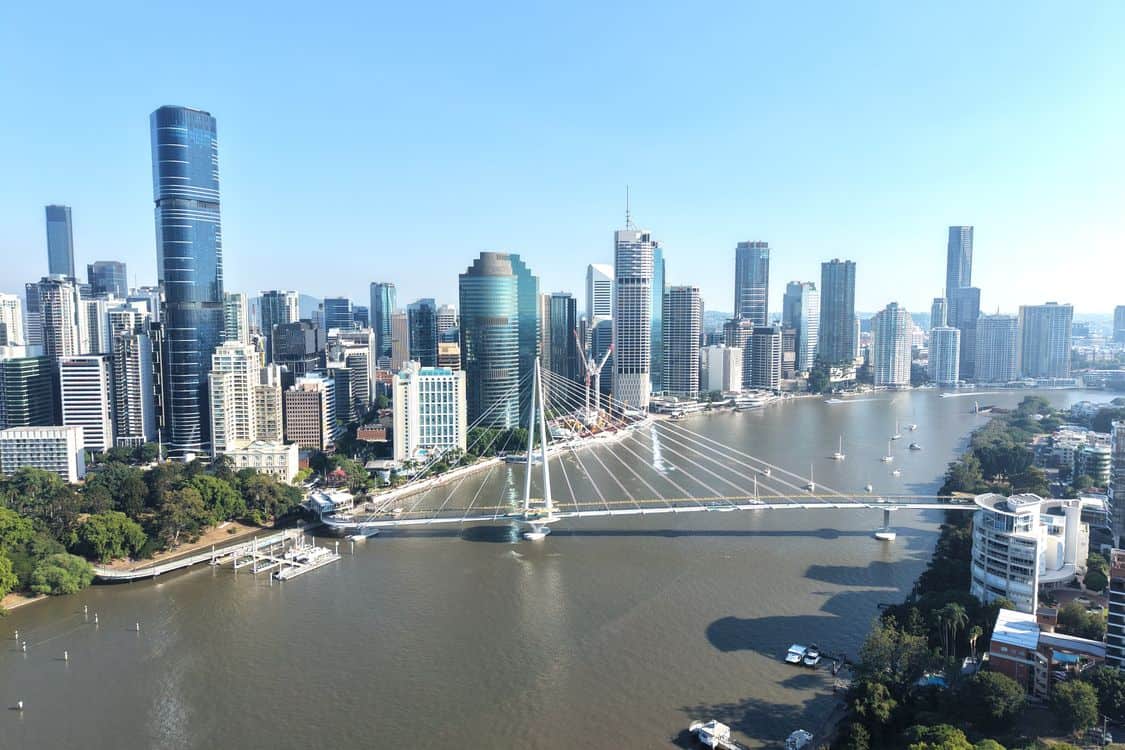
Latitude is only part of the story. Brisbane’s high number of clear-sky days, combined with reflective surfaces like water at the river and bay, pushes effective UV exposure higher than the raw index number sometimes suggests. Cloud cover doesn’t reliably cut UV the way people assume it does either.
That combination is a big part of why Queensland carries the highest melanoma incidence rate of anywhere in the world, a statistic public health bodies have been citing for years without much movement in the trend.
Brisbane’s outdoor lifestyle amplifies the exposure risk further. Weekend sport, riverside walking paths, and a school calendar built around outdoor activity all mean cumulative sun exposure across a Brisbane childhood tends to run higher than in cooler capital cities, a factor dermatologists point to when explaining why Queensland’s skin cancer statistics diverge so sharply from the national average.
Turning awareness into a habit
Sun protection advice hasn’t changed much in decades: broad-spectrum sunscreen, protective clothing, shade during peak hours. What has changed is how easy it is to check your own skin against that risk profile with a professional, rather than guessing.
Local practices such as Dermatology Clinics Australia Brisbane report that patients booking skin checks increasingly cite the UV forecast itself as the trigger for making an appointment, rather than waiting for a mole to visibly change first.
That shift, from reactive to preventive, is a more useful behavioural change than any single new treatment or technology. Checking the UV index alongside the temperature each morning costs nothing and takes seconds, and in a city like Brisbane it’s more relevant to daily decision-making than the rain forecast most people actually read.
Digital dermoscopy and mole mapping give patients a documented baseline to compare against over subsequent years, which matters in a climate where new spots and moles appear more often than in cooler parts of the country. Without that baseline, subtle changes are much harder for either the patient or the clinician to catch early.
Until the index becomes as habitual a check as rain probability, Queensland’s sunburn and skin cancer statistics will likely keep reflecting a gap between the data available and the behaviour it should be driving. The forecast itself isn’t the problem. Too few people build it into a daily routine.