
Most conversations about desert outdoor living start and end with heat. The sun is the obvious enemy, the thing every shade structure and UV-rated cushion is built to fight. But anyone who lived through the first day of July last year learned that the more violent threat in the valley does not come from above. It comes sideways, fast, and with almost no warning.
A sudden, severe windstorm tore across the Las Vegas Valley that evening, and it reframed something locals had quietly underrated for years. In a climate this exposed, the question is not only whether your patio furniture can take the sun. It is whether it can survive the night the wind decides to rearrange your backyard.
That distinction matters when you are deciding what to buy, where to put it, and how to anchor it down.
What a Single Evening Did to the Valley
The storm was not a gentle summer breeze that knocked over a few umbrellas. The National Weather Service later described the event in unusually dramatic terms, and the damage numbers backed it up.
At the height of the storm, the winds downed nearly 60 power poles across the valley, with gusts measured up to 70 miles per hour. More than 33,000 NV Energy customers lost power, some of them for days, and the city opened cooling stations and an emergency shelter for residents stuck without air conditioning.
Streets were closed by fallen lines, trees were uprooted, and crews were still clearing debris and restoring service well into the back half of the week.
For a homeowner, the lesson hiding inside those numbers is simple. If a gust can snap a utility pole, it can certainly fling an unsecured chair through a sliding glass door.
Why Wind Changes the Furniture Math in the Desert
Heat selects for materials that resist UV and stay cool to the touch. Wind selects for something different entirely: weight, low profile, and the ability to either stay put or ride out a gust without becoming a projectile.
This is where a lot of bargain patio furniture quietly fails. Lightweight hollow frames and tall, sail-like backs are easy to carry and easy to store, which also makes them easy for the wind to pick up and throw.
Powder-coated aluminum has long been the desert favorite because it shrugs off sun and heat without rusting. Its one tradeoff is that it is light, which means in a wind-prone yard it benefits from being paired with heavier anchored pieces or secured when a storm is forecast.
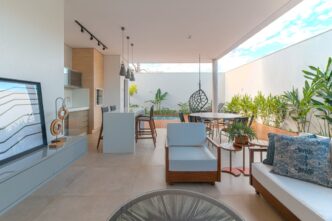
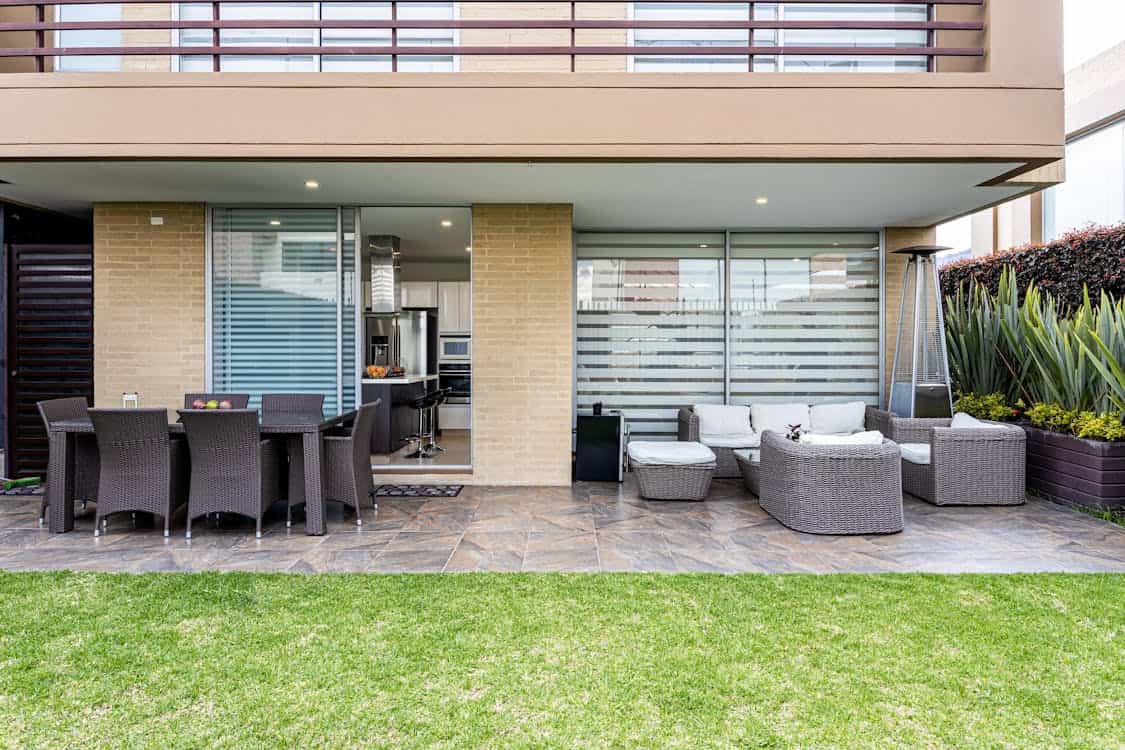
Lower-slung designs fare better, too. A deep modular sectional that sits close to the ground presents far less surface for the wind to grab than a tall-backed dining chair, which is part of why those pieces have become so popular on valley patios.
None of this means giving up comfort. It means weighting the decision toward pieces that will not turn into hazards the next time a virga-driven downburst comes through.
Designing a Patio That Holds Up When the Wind Arrives
The practical takeaways from a storm like that one are not complicated, but they do change how a thoughtful homeowner sets up a space.
Storage is the first one. Storage benches and deck boxes that double as seating give cushions, umbrellas, and lightweight accessories somewhere to go when wind or dust is on the way, and the best designs make stashing them a thirty-second job rather than a chore.
Anchoring is the second. Umbrellas want heavy weighted bases rather than light stands, freestanding heaters benefit from being secured, and anything tall and light is better folded and stored than left standing overnight during monsoon season.
The structure overhead matters most of all. A solid, properly engineered patio cover does more than block sun; a well-built one is rated to handle wind loads that a flimsy umbrella or pop-up canopy cannot, which is exactly why the open-canopy approach keeps failing in this valley.
The furniture underneath a real cover is simply better protected, both from the sun that fades it and the gusts that scatter it.
The valley will keep getting these sudden, violent wind events, especially as monsoon season collides with the summer heat. The homeowners who treat wind as a design input rather than a freak exception are the ones who will not spend a July morning fishing their chairs out of the pool.