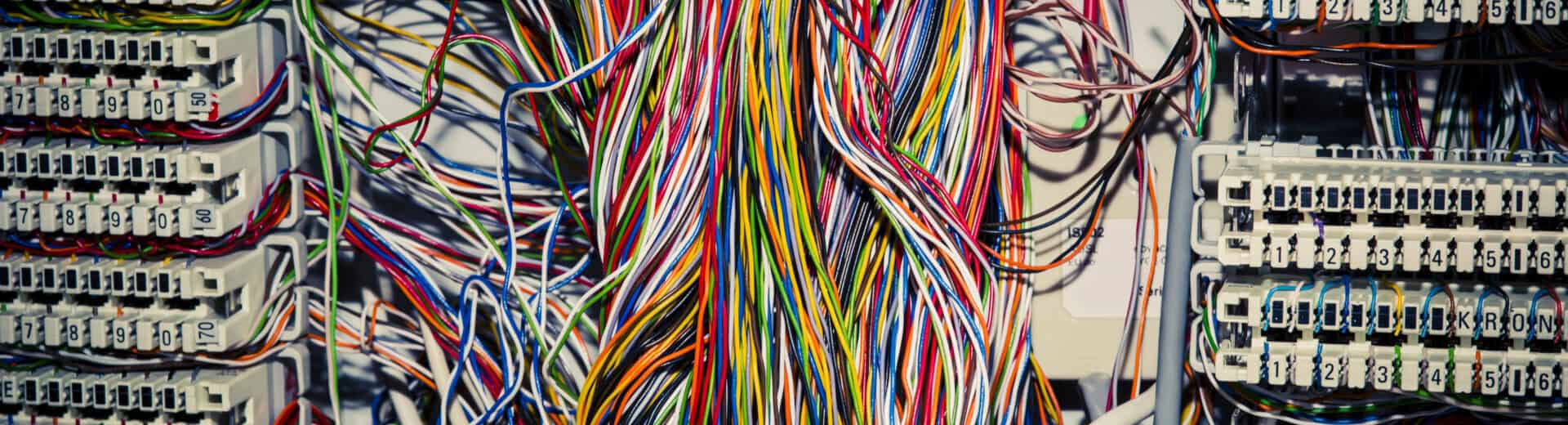

For most of the last decade, the death of the copper phone line was a story that always seemed to live a few years out. Carriers talked about it. Consultants wrote white papers about it. And the business owner in White River Junction with four analog lines in the back closet kept paying the bill, because the lines still worked and nobody had sent a letter that actually meant anything.
That changed in June 2026, when AT&T began the full discontinuation of its copper Plain Old Telephone Service across the markets it controls. The shutoff itself doesn’t touch every Vermont business directly. What it does is end the argument about whether this is real.
The copper sunset is no longer a forecast. It is a carrier with a date on the calendar pulling the analog network out from under the businesses that built their phones, their fax lines, and half their alarm panels on top of it.
The June Deadline That Stopped Being Hypothetical
The regulatory groundwork for this got laid quietly. In late March 2026, the FCC passed an order that stripped away most of the procedural friction carriers used to face before retiring copper, handing them broad authority to grandfather legacy lines and discontinue them on far shorter timelines.
Grandfathering sounds gentle. It isn’t. In practice it means the carrier will keep your line alive for now but won’t sell you a new one, won’t let you move the one you have, and reserves the right to shut it down with as little as 90 to 180 days of notice once a discontinuance is filed.
The pricing tells the real story. As carriers stopped competing for copper customers and started managing them toward the exit, rates on legacy business lines climbed into territory that would have looked like a billing error a few years ago, in some documented cases $2,700 per line per month. A business holding onto four of those lines out of habit is suddenly looking at a five-figure annual bill for a service the carrier is actively trying to retire.
None of this is unique to AT&T’s footprint. The same FCC posture applies to every incumbent carrier in the country, including the ones serving the Upper Valley. AT&T’s June move is simply the largest, most visible domino, and it tells smaller regional carriers exactly how much room they now have to follow.
Why “Just Move Everything to the Cloud” Misses the Vermont Reality
The reflexive answer to copper retirement is to throw the whole phone system into a hosted cloud platform and be done with it. For a marketing agency in a fiber-rich metro, that’s often a fine answer. For a manufacturer, a clinic, or a town office in rural New England, it skips over a real question about what happens when the internet hiccups.
Cloud-only phone service has exactly one path to the outside world: your data connection. When that connection drops, and rural connections still drop, every phone in the building goes silent at the same moment. There is no separate voice path to fall back on.
This is where an on-premise system earns its keep in a place like Vermont. A system that physically lives in your building, riding modern SIP trunks for dial tone, keeps call handling, extensions, voicemail, and internal transfers running on hardware you control rather than on a server three states away.
It also means the migration off copper doesn’t have to be a rip-and-replace of how your whole office communicates. You’re swapping the underlying transport from analog copper to IP, not throwing out the phones on every desk and retraining the entire staff in the same week.
The businesses that handle copper retirement worst are the ones who treat it as a pure cost-cutting scramble the day a disconnect notice lands. The ones who handle it well treat it as the moment to choose a platform deliberately, on their own timeline, before the carrier sets the timeline for them.
What a Copper-Free Office Actually Runs On
Strip away the jargon and a post-copper business phone setup has two pieces. There’s the connection that carries calls in and out, which is now SIP rather than copper, and there’s the system inside the building that decides what those calls do once they arrive.
That second piece is where the NEC SL2100 and SV9100 sit. They’re on-premise communications systems built to run over IP and SIP from the start, scaling from a five-person shop up through operations with a couple hundred users, with the conferencing, mobility, and remote-worker features that copper lines never offered in the first place.
The detail that matters most in this transition is the one nobody thinks about until an emergency: 911. A modern on-premise system handles E911 properly, alerting designated staff on-site the moment someone dials 911 so responders can be guided straight to the right person when they arrive. A bare analog line never did that, and a poorly configured cloud setup can get it dangerously wrong.
Copper had a good run of roughly 150 years. What replaces it isn’t a downgrade. It’s the first phone setup most of these businesses have ever had that was actually designed for how they work now.